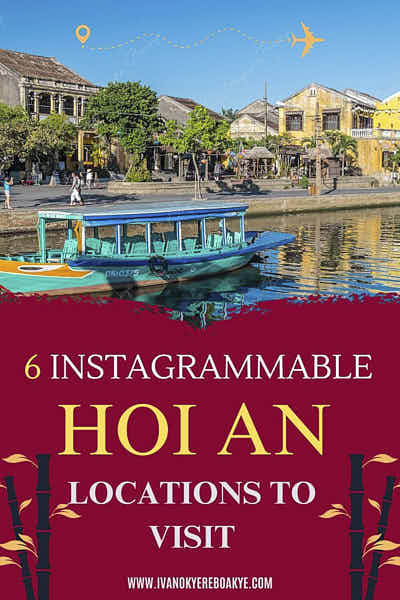
- Find the most beautiful photo spots in Hoi An with suggestions on when and how to photograph them.
- I share personal tips for timing, light, and navigating the town in a relaxed way.
- Use this guide if you’re visiting Hoi An and want natural, gorgeous travel photos without the stress.
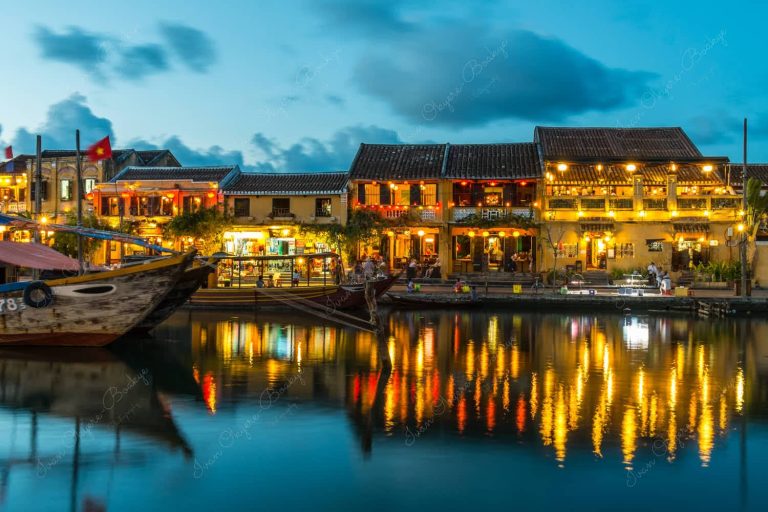
These Hoi An photography spots cover the Old Town’s yellow-walled streets, the Japanese Covered Bridge and different views along the riverfront. I’ve brought together my photographs and practical tips on light and timing to help you decide where to go, when to return and which places fit the time you have.
Best time to visit Hoi An Old Town
Graceful historic Hoi An is an incredibly atmospheric and photogenic town you must visit on a trip to Vietnam. Located by the Thu Bon River, it was a prominent Vietnamese trading port during the 15th and 19th centuries for silk, porcelain, pepper, and cinnamon. The architectural style in the city therefore has a lovely mix of Vietnamese, Japanese, Chinese, and French styles. The best attractions in Hoi An are within the popular areas of Riverside and Old (Ancient) Town, which are easily explored on foot.
The weather for Hoi An is generally better between February to July when it is drier, sunny and warm. The temperature ranges from 25°C to 35°C, which also means this is peak tourist season to visit Hoi An, with higher prices and crowds. The rainy season from August to January is quieter, so good for lower prices and peaceful exploring. Temperatures remain high between 20°C to 25°C, however, the humidity can be high. If you are visiting during the wetter months, check local weather updates and allow some flexibility as heavy rain and storms can affect your photography plans. October and November can also see many more rain showers.
The Hoi An lantern festival, held on the 14th day of the lunar month is also one of the best times to visit Hoi An Old Town. During this time, the streets and the river are lit by colorful lanterns, and people release candles on the river for good luck. Check the corresponding date for your visit if you are interested in seeing it.
Hoi An Old Town is a beautiful place for people who love to explore ancient towns, take stunning photos and for street photography. You can wander around Hoi An Old Town for hours without getting bored, especially if you love visiting places with a rich history. However, with so many picturesque spots, you may be challenged hurrying from place to place to find the most instagrammable spots. Even worse is arriving at places at the wrong time when the sun is directly in front of you, giving you awful photos.
The best time of day to visit is ideally early morning to enjoy the quiet streets or at sunrise for that magical golden light quality. Yes, sunrise and sunset are perfect for great lighting, but you can’t be everywhere at those times! So some forward planning helps. You can then use the time in between to wander around Hoi, eat something or shop for souvenirs at the Hoi An Market.
My recommendations below of some of the best spots of Hoi An will help you to plan the best time of the day to visit. This will help you get the most out of your photographer skills to return home with perfect photos.
1. Tran Phu Street (Trần Phú)
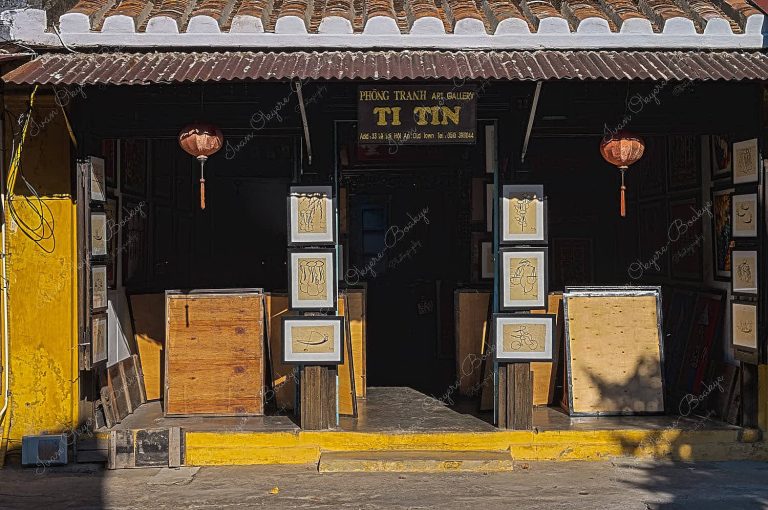
Hoi An Old (Ancient) Town was declared a UNESCO World Heritage Site in 1999. Its narrow streets are lined with beautifully restored houses, quaint shophouses and makeshift stalls selling handicrafts, jewellery, traditional clothing, and other tourist goods.
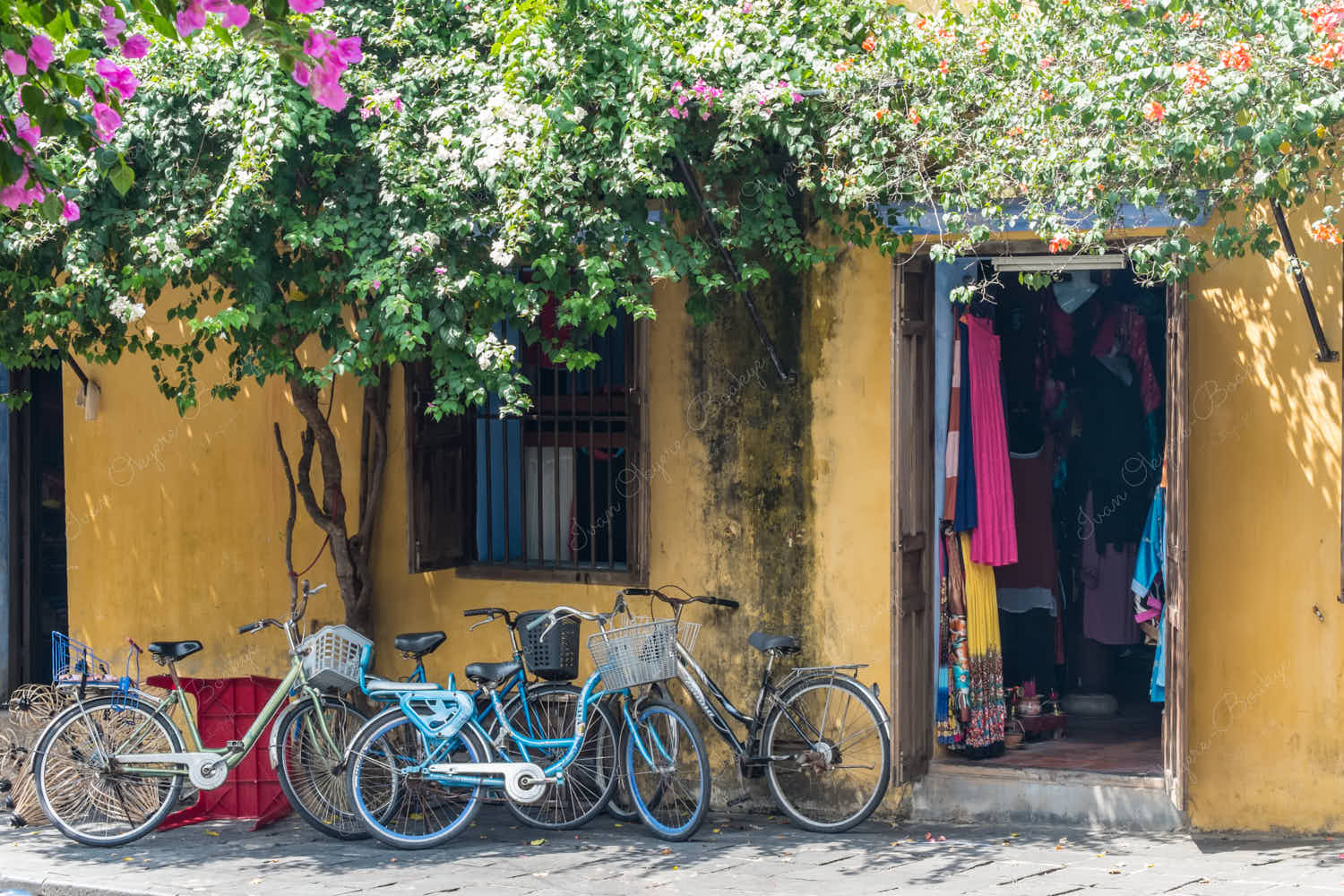
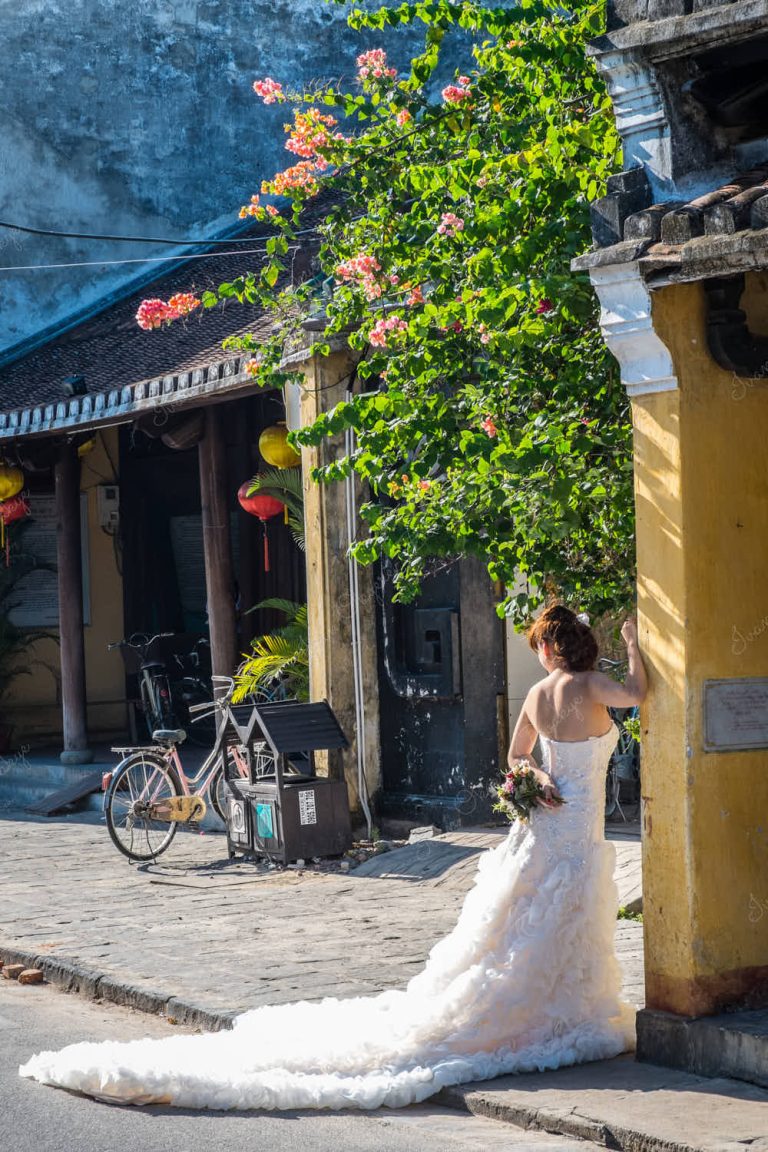
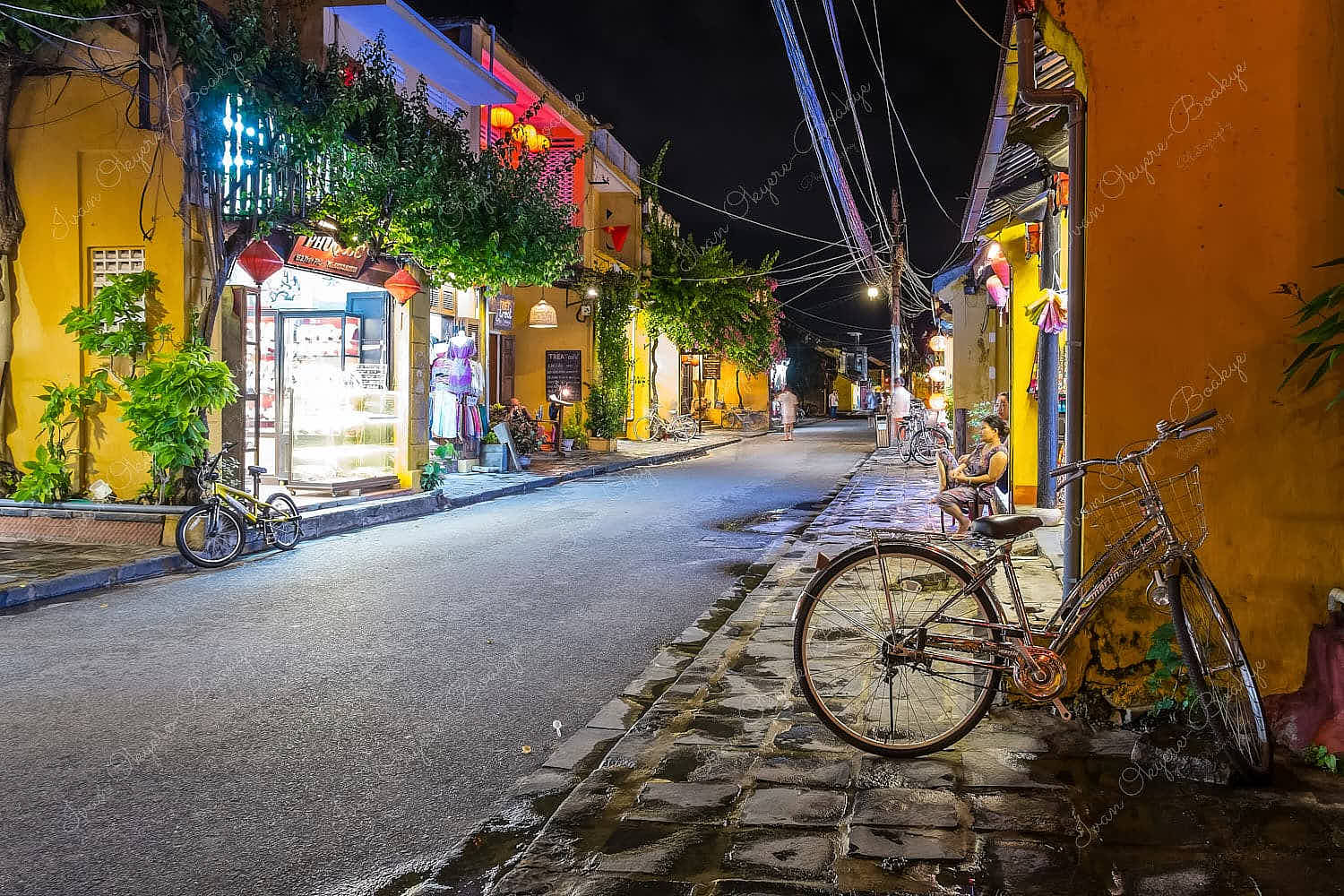
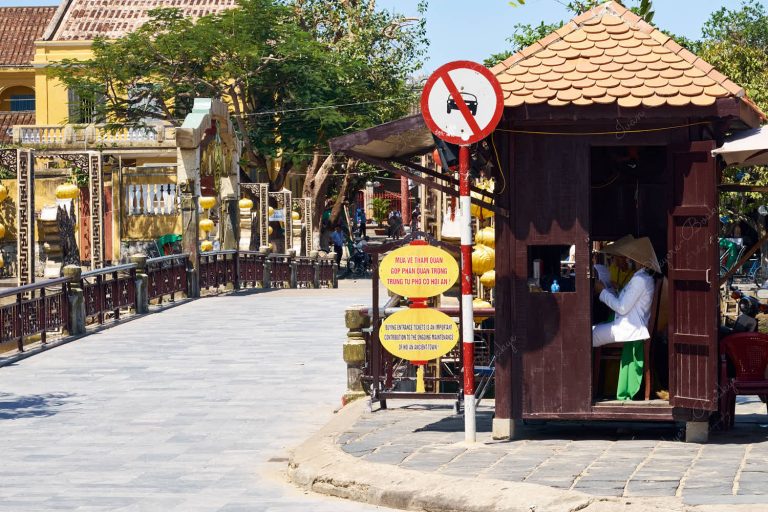
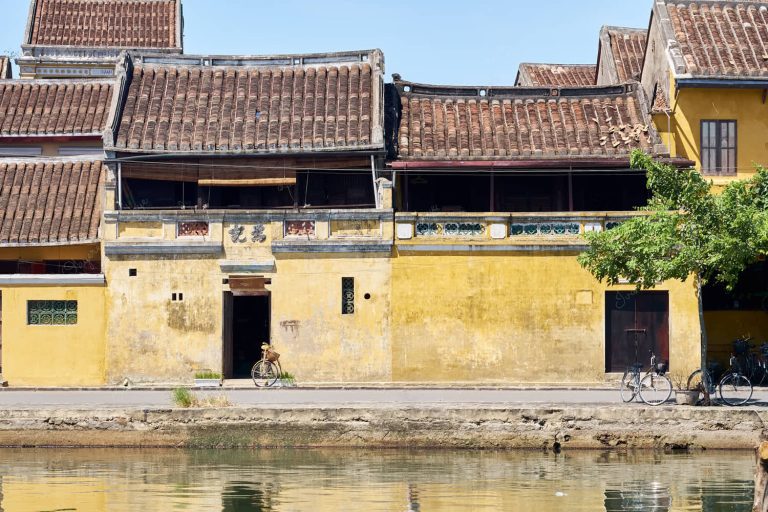
Tran Phu Street is one of the main streets in the Old Town, leading towards the famous Japanese Bridge, and great for street photography. The main colour of the building walls in Tran Phu Street and the surrounding side streets is a gorgeous golden yellow. This is a favourite colour as yellow symbolises royalty and superiority and is also practical in helping to reflect the heat. These faded decaying walls also provide a great backdrop for taking colourful contrasting photos of yourself and others.
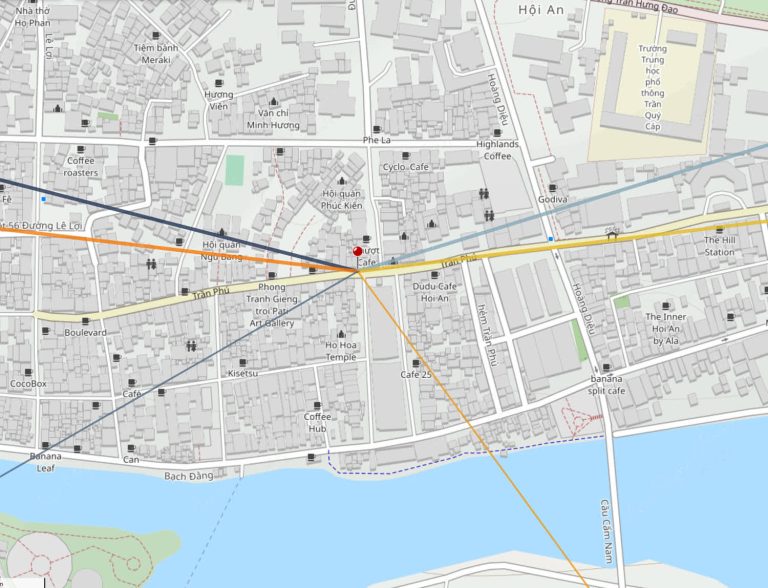
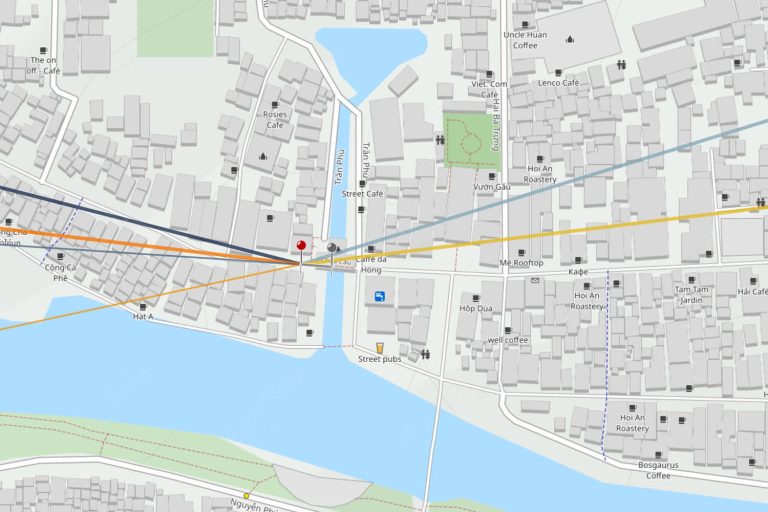
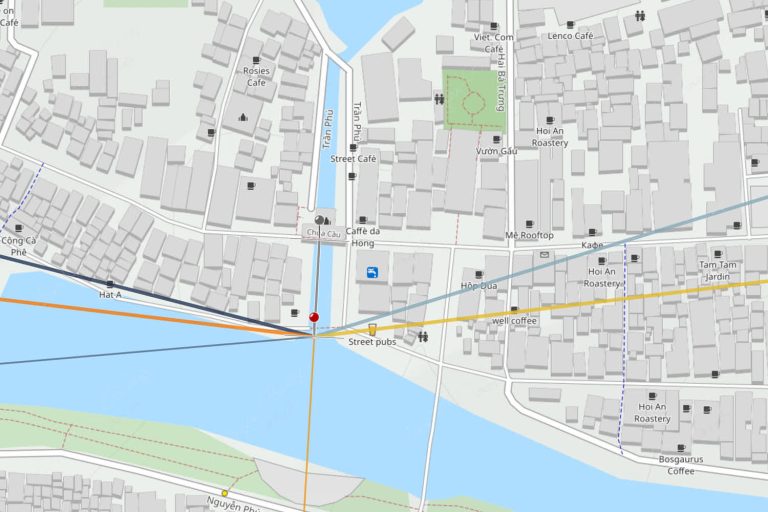
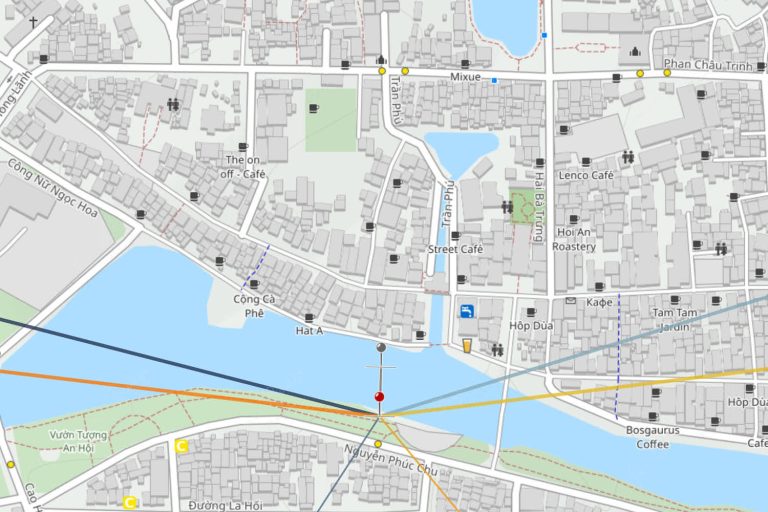
The sun-position examples below are based on September dates. Use them as a starting point, then check sunrise, sunset and the sun’s direction for your own visit; the same viewpoint will not have identical light throughout the year.
Photo tips for capturing the best shots
Walking down Tran Phu Street allows you to explore the wonderful shops and street life on Tran Phu and the surrounding side streets. Depending on the time of year you visit, the best times to aim for are generally:
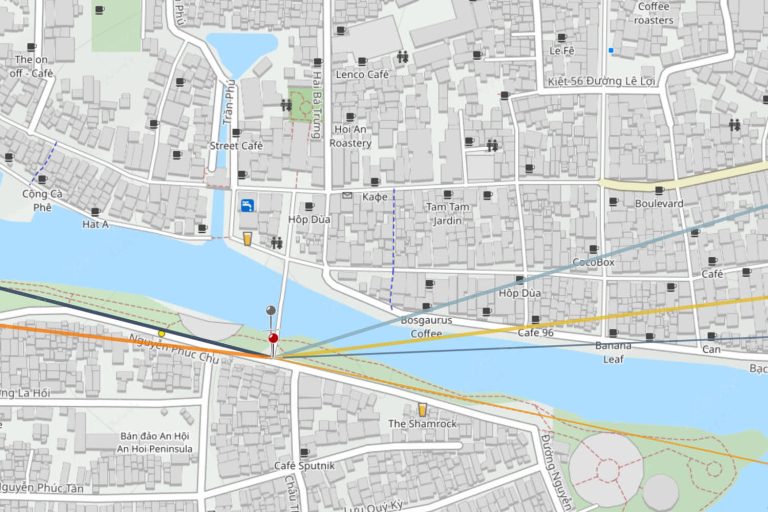
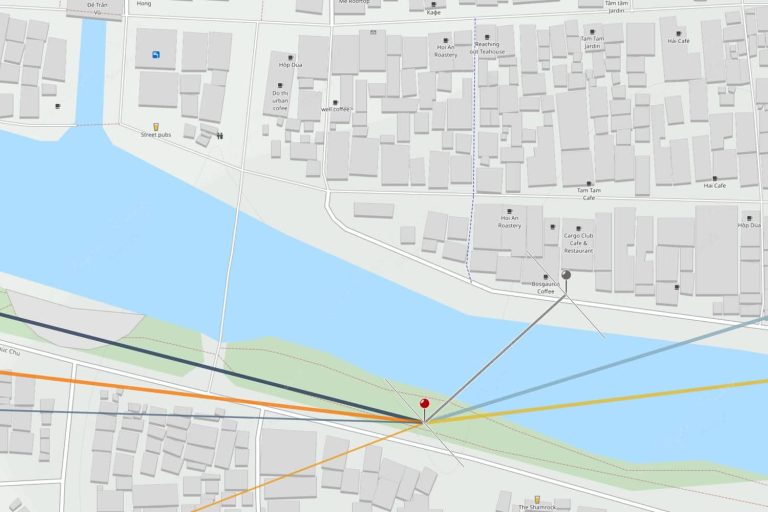
- before 12pm if you are walking towards the west as the sun will not be in your face. You will be able to take photos towards the west and also towards the north side of the road. (see the screenshot above – note this is an example using September, so check for the most ideal timing conditions for your specific date of travel)
- after 12pm up to sunset for daytime photos if you are walking towards the east
- in the evening and night for lovely illuminated photos. Ideally, use a tripod for sharper photos and longer exposures for fewer moving people in your shots or to get that blurred people motion effect.
2. Japanese Covered Bridge – Entrance
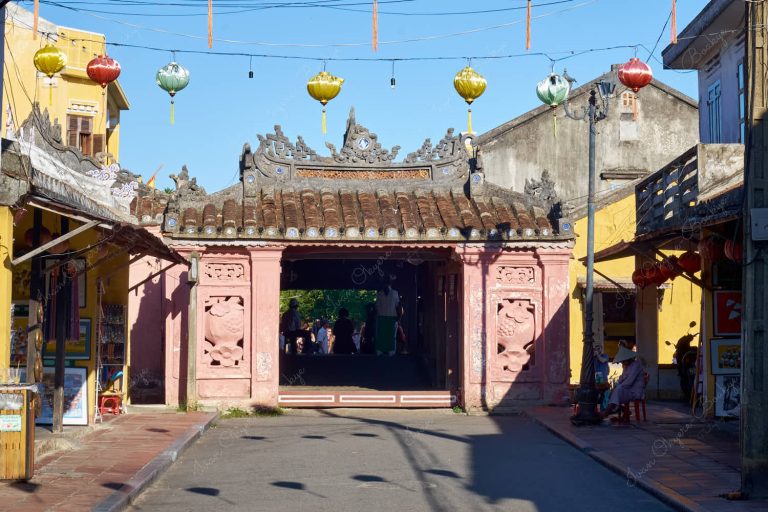
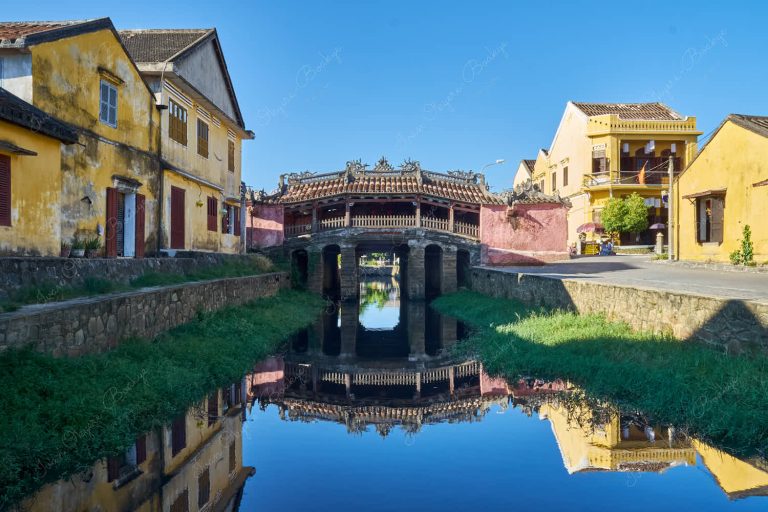
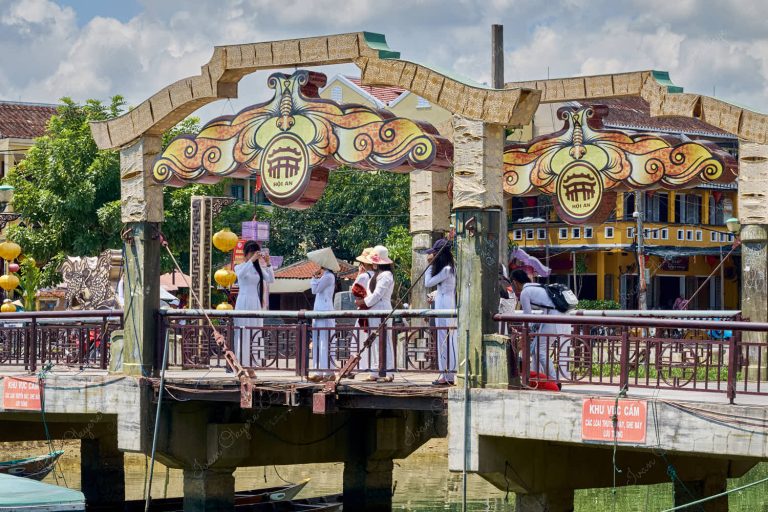
The Japanese Covered Bridge an iconic symbol of Hoi An Old Town with a beautiful arch bridge, was built in the 1590s. Also called Cau Nhat Ban, it connected the Japanese and Chinese quarters when Hoi An was a bustling international port town.
It also has a small temple dedicated to a Taoist deity, adding another layer to its history beyond its role as a crossing, symbolising goodwill between Chinese and Japanese merchant communities. It’s a wonderful bridge that is elaborately decorated in Chinese and Vietnamese architectural styles.
The bridge has kept a distinctively Japanese character. The entrances are guarded by statues of 2 monkeys on one side and 2 dogs on the other. One explanation for this is that both animals are a symbol of holiness in Japanese culture. Other reasons are thought to be linked to many Japanese emperors being born in the years of the dog and monkey. This coincides with the bridge construction starting in the year of the monkey and finishing in the year of the dog.
Walking across the bridge and visiting the temple inside the bridge requires the purchase of a ‘Hoi An Old Town’ ticket. The ‘Hoi An Old Town’ ticket will also give you access to five attractions in Hoi An Old Town.
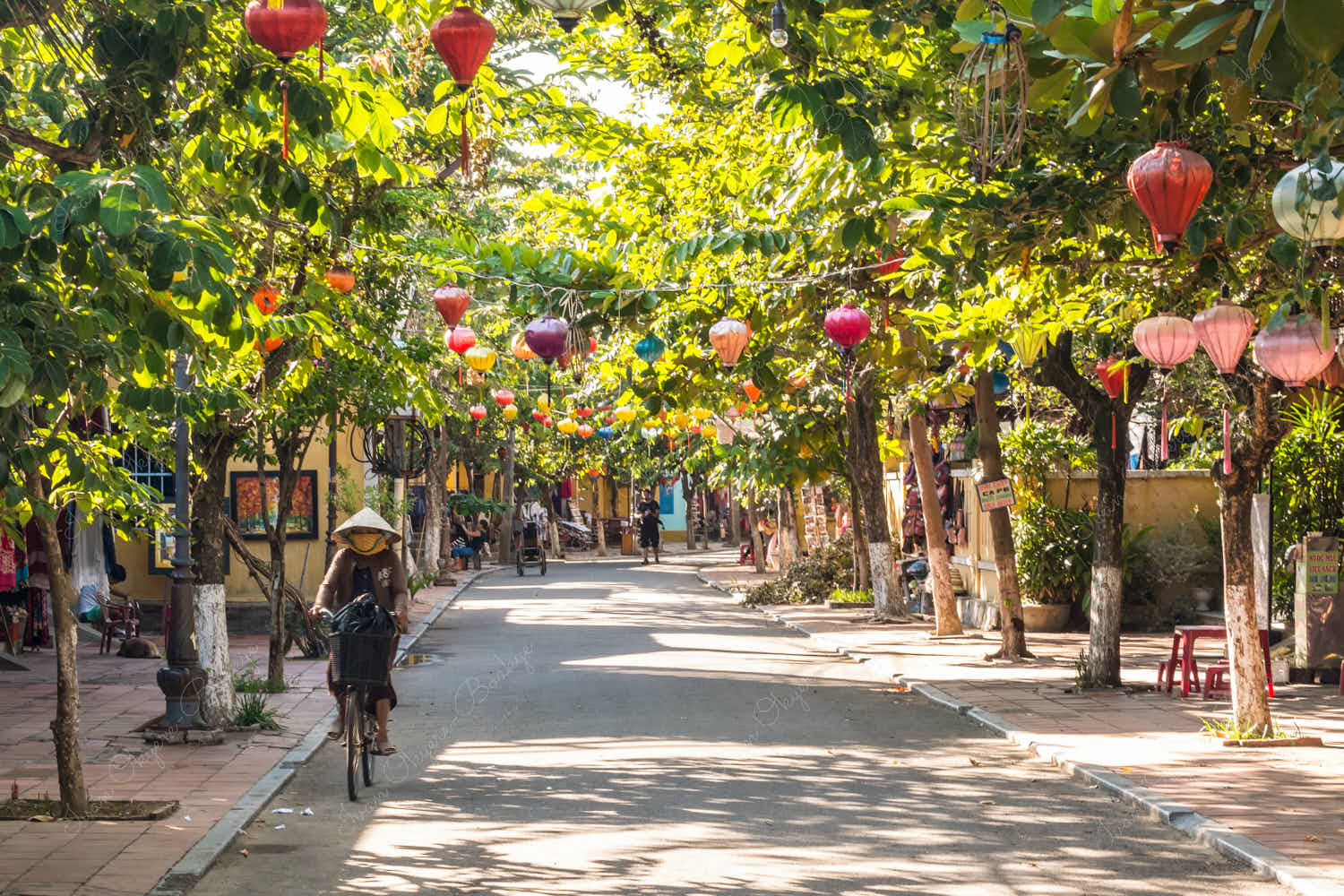
Try and also explore Nguyen Thi Minh Khai Street (Nguyễn Thị Minh Khai ) when you cross the bridge from the Tran Phu side. It’s a lovely quieter tree-lined street with lots of hanging Chinese lanterns, shops and food places. It is a bit quieter than the busier Tran Phu side, with all the tourists fighting for photos of the bridge. It is a great spot for creative street photos, especially in the evening and at night when the lanterns are lit.
The bridge underwent restoration in 2024, so its appearance may differ from the older photographs in this guide.
Photo tips for capturing the best shots
This is one of the best places to take photos early in the morning before 7am. Regardless of the time of year, it will be the quietest time for getting a clear photo. I have shown the Nguyen Thi Minh Khai entrance side of the bridge rather than the Tran Phu side as it’s normally quieter. Most tourists tend to stay on the Tran Phu side as they hurry to grab photos of the bridge and other parts of Old Town. Depending on the time of year you visit the Japanese Bridge, the best times to aim for are generally:
- early morning up to 7/8am for both sides. The Tran Phu side will be sunlit, but the Nguyen Thi Minh Khai side won’t be
- between 1-3pm for the Nguyen Thi Minh Khai side. Depending on what time of the year you go there can be a lot of people inside the bridge and on the other side. So try using a wider aperture to get the façade in focus with the centre and far end of the bridge slightly blurred out. (see the screenshot above – note this is an example using September, so check for the most ideal timing conditions for your specific date of travel)
3. Japanese Covered Bridge – Front
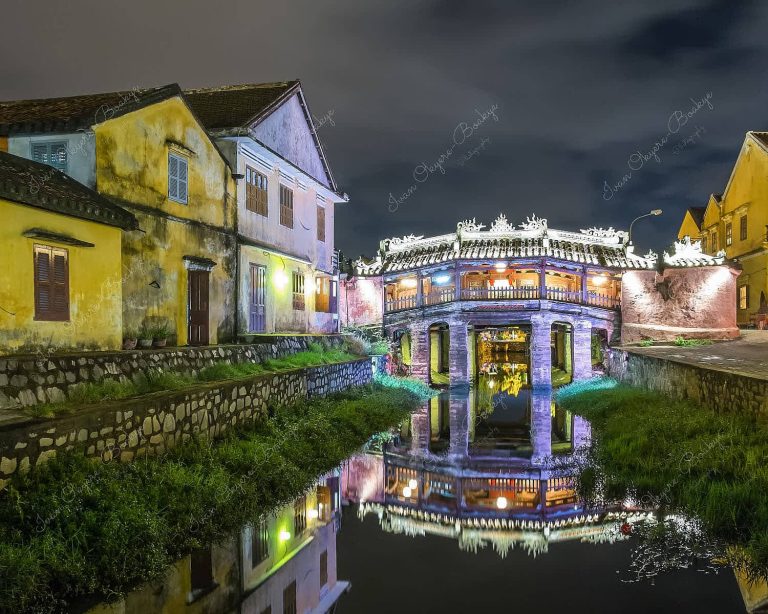
Search for Hoi An and you will find this gorgeous view of the Japanese Covered Bridge and reflection in the Thu Bon River. It is an amazing experience and personally much more enjoyable at night when lit up because of the changing colours. A long exposure can blur moving people, although anyone standing still may remain visible.
Photo tips for capturing the best shots
Depending on the time of year you visit the best times to aim for are generally:
- any time between 11am-1pm to get a daytime shot with sufficient sunlight hitting the front of the bridge. (see the screenshot above – note this is an example using September, so check for the most ideal timing conditions for your specific date of travel)
- from twilight onwards for photographing different colour combinations to see which one gives you that ‘I know I got a good one there’ feeling!
4. Bridge of Lights (Cau An Hoi)
The Bridge of Lights connects Hoi An Old Town with An Hoi Island, which holds the Hoi An Night Market. Also called Cau An Hoi, it has many interesting design features and is lined with butterfly-themed hanging lanterns. This makes the bridge a perfect photo spot for illuminated images of the bridge at night.
Every full moon, Hoi An Ancient Town celebrates the Hoi An Lantern Full Moon Festival using silk lanterns to illuminate the houses and streets. It takes place between the bridge and the Japanese Covered Bridge and attracts everyone with traditional food and different events throughout the night. The main highlight involves floating colourful lanterns down the Thu Bon River as locals and tourists light the lanterns wishing for happiness and prosperity.
Photo tips for capturing the best shots
The panoramic views from the Bridge of Lights are unbeatable but can get very crowded. Don’t forget to also look for other smaller details around and under the bridge, e.g. locals going about their normal routines. Depending on the time of year you visit, the best times to aim for are generally:
- from sunrise to about 11am for shooting images of the bridge from the An Hoi island south side and from the bridge towards the west. Going earlier is better for softer, warmer lighting. (see the screenshot above – note this is an example using September, so check for the most ideal timing conditions for your specific date of travel)
- at sunset for shooting towards the west side of the river and Hoi An Old Town. The warm orange reflections on the river and yellow-coloured buildings are unforgettable
- after 2pm till sunset for shooting towards the east side of the river and Hoi An Old Town. Ideally, in the last 2hrs before sunset to get those lovely warm front-lit images
5. Hoi An Old Town Riverfront – West Side of Bridge of Lights
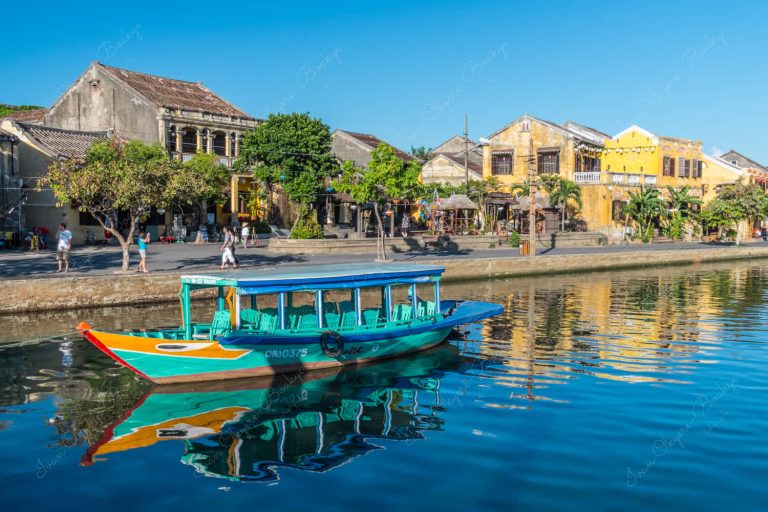
A favorite place to view the golden yellow buildings in Hoi An, is looking back from An Hoi Island across Thu Bon River. Walking along the waterfront, enjoying the cafes, restaurants and shops, and watching boats floating on the river is great fun. This area became popular when a famous Hoi An photographer Réhahn photographed a girl wearing a white Ao Dai walking past an old yellow wall.
Photo tips for capturing the best shots
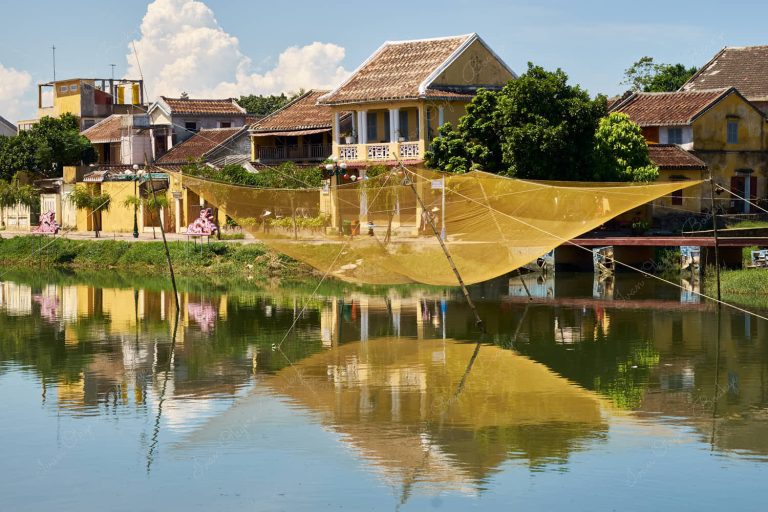
The west side of the Hoi An Old Town riverfront is the quieter of the two sides. One unique thing and photo opportunity from this side is the large yellow fishing nets hanging above the Thu Bon River when not in use. These provide opportunities for lovely river reflection photographs taken from the west side of An Hoi island or from the Bridge of Lights. Depending on the time of year you visit, the best times to aim for are generally:
- from sunrise to about 11am for shooting images towards the west side of the river and Hoi An Old Town. Going earlier is better for softer, warmer lighting. (see the screenshot above – note this is an example using September, so check for the most ideal timing conditions for your specific date of travel)
- at sunset for shooting towards the west side of the river and Hoi An Old Town. You will then be able to capture the warm orange light hitting the river and yellow buildings.
6. Hoi An Old Town Riverfront – East Side of Bridge of Lights
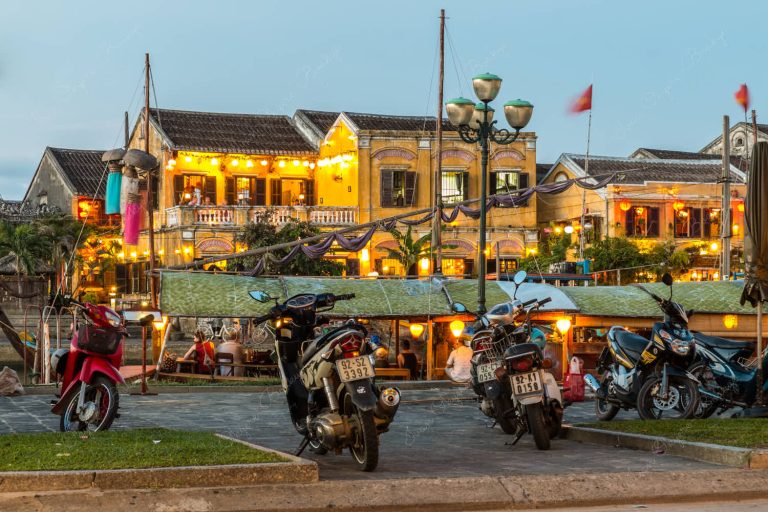
The east side of Hoi An Old Town riverfront is the busier tourist end, and the best area to take photos in Hoi An. There are many chances here for street photography of street vendors, locals, boats on the Thu Bon River, and nighttime illuminated reflections in the river. It is one of the coolest places around the old town to just take your time and explore.
Photo tips for capturing the best shots
Depending on the time of year you visit the best times to aim for are generally:
- from 2pm onwards until evening when shooting eastwards from either the north or south side. (see the screenshot above – note this is an example using September, so check for the most ideal timing conditions for your specific date of travel)
- from sunset onwards if shooting towards the west
Two extra photo stops if you have time
Hoi An Market
Visiting markets is fun and great for photos, and Hoi An Market is a wonderful photography spot located in an old building. The interesting building architecture and colorful marketplace displays make it a lovely place to spend some time.
Going early in the morning is best for experiencing the best vibes as Vietnamese locals go about their daily shopping, chatting and bartering. It’s a great place to buy gifts or souvenirs like beautiful handmade lanterns or try out tasty authentic Vietnamese food.
Hoi An Night Market
The Hoi An night market is one of Hoi An’s must-experience evening events. It runs along the Thu Bon river banks with colorful displays of lanterns, souvenirs, traditional clothing and delicious street food.
It opens daily from about 5pm to 11pm with around 8pm onwards being the best time with the lit lanterns reflecting in the river. It is especially worth visiting when there is a full moon on the 14th day of the lunar month for the Hoi An Lantern Festival. The streets are lit by colorful lanterns after dusk, and Vietnamese locals float colorful paper lanterns containing lit candles on the Thu Bon River. Other activities to enjoy include traditional music and dancing, local cultural performances, plus of course lots of tempting food to enjoy.
Map of photo spots in Hoi An Ancient Town
Need a little help finding your way around the streets of the Old Town in Hoi An?
I have created a custom Google map showing all of the above photo spots to help you visualise and plan your trip. You can save this on your phone Google map app to have an easy way to navigate to the Old Town sights. Have a get time and do drop me a comment to let me know how it goes.
So, how do you make the most of Hoi An’s photography spots?
Start with a few places you genuinely want to photograph and give yourself time to enjoy them. Tran Phu Street, the Japanese Covered Bridge and the riverfront offer different views of Hoi An, so you do not need to rush through every location to come away with amazing photos that mean something to you.
For me, the Japanese Covered Bridge is especially appealing at night, when its colours and reflections change the scene. You might prefer the yellow-walled streets earlier in the day or the activity along the river as evening approaches. Use the timing tips as a starting point, then work with the light, weather and pace of your own visit.
The best way to enjoy these Hoi An photography spots is to leave a little room for looking around without constantly looking through a camera. If you have time, return to a favourite viewpoint and see how it feels in different light.
So, before you move on, keep these close:
- Fewer locations, better timing: a little longer in a place you enjoy can be more rewarding than rushing to the next stop.
- Early mornings can give you more breathing room: they are worth considering if you prefer a calmer start, even though quiet streets are never guaranteed.
- Enjoying Hoi An matters more than chasing every shot: the photographs worth keeping are not always the ones you planned.
FAQs
Q: What are the top photographic locations in gorgeous Hoi An for capturing the classic view of the old town?
A: For iconic photos in Hoi An old you’ll find the Japanese Bridge, the Thu Bon River banks at sunrise, the yellow walls along Nguyen Thai Hoc Street, Faifo Coffee with its colonial vibe, and the Old House of Tan Ky fun to explore. They are must see spots that give the authentic view of the old town and perfect place images for your instagram feed.
Q: When is the best time of the day to take photos in Hoi An to avoid crowds and get the best light?
A: Hoi An at dawn and the hour after sunrise are ideal. The golden yellow light, blue sky and quiet streets of Hoi An at dawn make it one of the best times to shoot. Sunset and the blue hour on the Thu Bon River are also magical, but if you want empty streets, go early for wedding photos or solo shots.
Q: Where can I find the best instagram spots in Hoi for colorful lantern shots and street scenes?
A: The lanes near the Japanese Bridge and the streets around Faifo and Nguyen Thai Hoc Street are full of lanterns and yellow photogenic walls in Hoi. The lantern-lined streets by the river and the alleys near Tan Ky house are lovely images for your Instagram feeds.
Q: Can I include the beach in my Hoi An photo itinerary — where are the best coastal locations?
A: Cua Dai Beach and An Bang Beach are nearby gorgeous ocean spots offering lovely sunrise views. Cua Dai and Cua Dai Beach are also easy additions for golden-hour seascapes after a boat ride on the Thu Bon River.
Q: What practical tips should photographers know about shooting in Hoi An to get the best results?
A: Plan shoots for sunrise or sunset to capture the best light, arrive early to avoid crowds on Nguyen Thai Hoc Street and around the Japanese Bridge, carry a polarizer for river and sea reflections, and consider a boat ride on the Thu Bon River for unique perspectives.
Read Related Travel Guides
GET 20% OFF YOUR FIRST POND5 STOCK PURCHASE NOW!
Like this article? Pin it on Pinterest!